EBO2 (EBOO) vs Dialysis: How Ozone Dialysis Compares With Hemodialysis
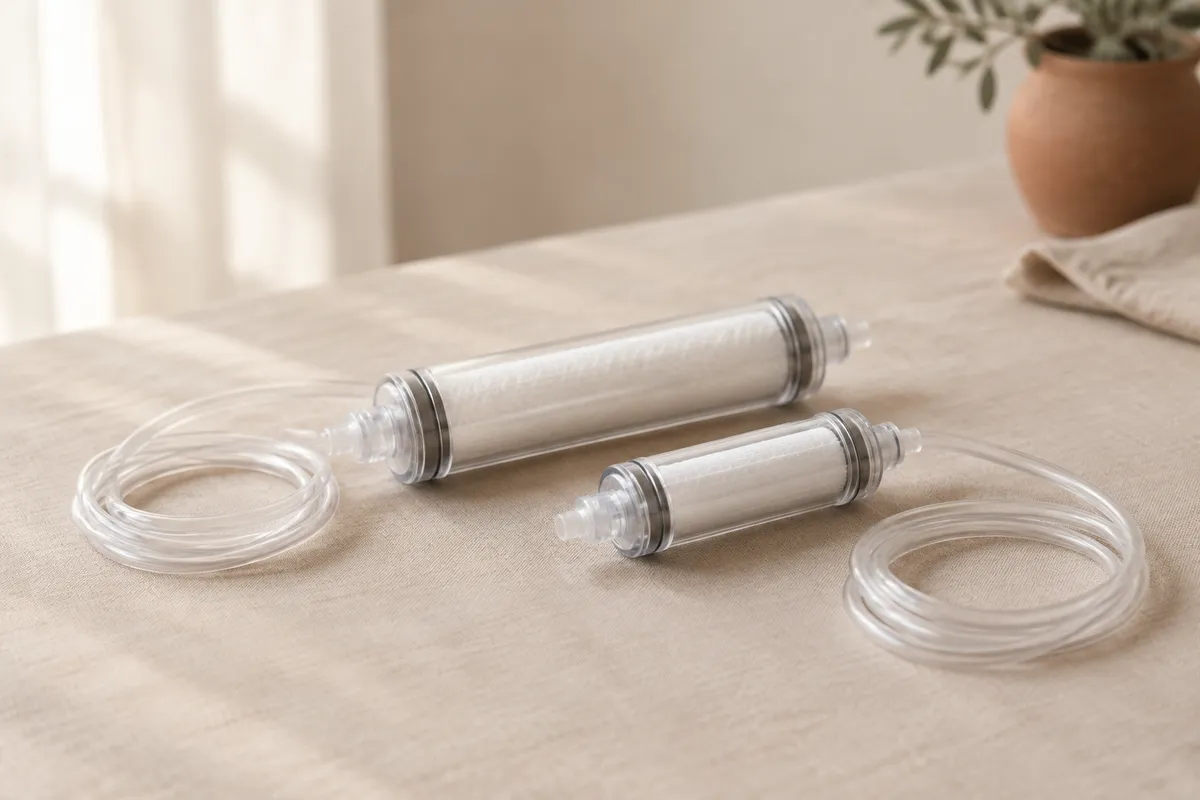
EBO2 (also called EBOO) is sometimes sold as “ozone dialysis,” and at least some US practices run it through the same kind of cartridge a kidney dialysis unit uses [16][17]. Both pump blood out of the body, past a membrane, and back. What sits on the other side of that membrane, for how long, and why, is different. Hemodialysis pumps blood past a membrane with prescribed dialysis solution on the other side, for about four hours, usually three times a week at a dialysis center, to take over part of the work of failed kidneys [1][4]. EBOO puts oxygen-ozone gas on the other side of the membrane, typically for one hour, to put ozone into the blood [8][13][16]. This guide sets the two side by side from federal regulations, a National Institutes of Health page, and the EBOO papers themselves; shows where the EBOO literature disagrees with itself about dialysis filters; and lists what evidence would be needed before EBOO could fairly be described in dialysis terms. Ozone therapy is not FDA-approved for any condition, and federal regulation calls ozone “a toxic gas with no known useful medical application in specific, adjunctive, or preventive therapy” [18].
Is EBOO a form of dialysis?
Not as the FDA’s regulations describe dialysis. Its regulation for conventional systems describes hemodialysis as “an artificial kidney system for the treatment of patients with renal failure or toxemic conditions,” in which “undesirable substances in the blood pass through the semipermeable membrane into the dialysate” [2]. The regulation for high permeability systems adds fluid overload and says they remove “toxins or excess fluid from the patient’s blood using the principles of convection (via a high ultrafiltration rate) and/or diffusion (via a concentration gradient in dialysate)” [1]. The National Institute of Diabetes and Digestive and Kidney Diseases describes hemodialysis as a treatment “to filter wastes and water from your blood, as your kidneys did when they were healthy,” and says it “can replace part, but not all, of your kidney function” [4].
EBOO was built for a different job. The Siena group that developed it described its aim as “amplifying the results observed with ozone autohemotherapy” [9], and its 2005 review described treating up to 4,800 ml of blood with an oxygen-ozone mixture in one hour [8]. The US practitioners who use the dialysis label set out “solely to quantify the amount of ozone uptake” during their sessions, and called “ozone dialysis” “a simpler more descriptive term” for “countercurrent administration of ozone gas using semi-permeable dialysis membranes” [16]. Clinics disagree about the name. One clinic page says the method is “often called ozone dialysis because the blood is passed through a dialysis membrane where the ozone is” [20]. Another says “Using terms like ‘ozone dialysis’ is misleading,” because dialysis “uses large volumes of dialysate fluid to osmotically remove toxins” and EBOO “does not use dialysate fluid” [19].
Same filter, or a different one?
The EBOO literature splits on this, and the split runs between the developers and later US practice.
The developers tried dialysis equipment first and turned it down. In 1999 they reported that they “first evaluated the classical dialysis-type technique” and “soon realized that semipermeable membranes are unsuitable because they are hydrophilic and vulnerable to O3,” and moved to hydrophobic, ozone-resistant hollow fibers [11]. In 2001 they wrote that semipermeable membranes, except for one, “were gas-transfer inefficient, allowed ultrafiltration and were more or less vulnerable to O3” [12]. Their 2007 device used microporous, ozone-resistant polypropylene fibers with a membrane area of 0.22 m², coated on the side that touches blood, with the gas flowing inside the fibers [13]. In 2010 the same group compared four dialysis filters with that kind of gas exchanger. The filters’ gas-exchange yield ranged “from 0 up to 70%,” their fibers were “somewhat altered by ozone,” and their materials “may release toxic compounds harmful for the patients”; the authors wrote that dialysis filters “should be specifically used only for dialysis” and that “some clinicians incautiously use them as GEDs” (gas exchange devices) [14].
Four US sources we read name a dialyzer as the cartridge. The 2023 ozone dialysis series circulated blood “through a Renak CTA (cellulose triacetate) 1500 dialysis chamber” [16]. An FDA warning letter in 2025 records that a Michigan maker of EBOO equipment bought “ABLE® H-200 High Flux Polyethersulfone Disposable Haemodialysers” sold as part of its EBOO kits, without evaluating the supplier [17]. A clinic that published a water test of its circuit says a “Renak CTA-1500 dialyzer was used for filtration and ozonation” [25]. In our own clinic data, as of October 4, 2026, 21 of the 174 clinics whose EBO2 page we could read name the device they use, and one of those names a hemodialyzer model. The authors of the 2023 series noted that they “do not know whether other dialyzing chambers and materials will show a similar loss” of ozone to the one they measured, an average of 23% absorbed or broken down by their own equipment [16].
Side by side
The table uses each source’s own units. The middle column is EBOO as its developers described it; the right column is “ozone dialysis” as one US clinic’s published series and the FDA’s 2025 letter describe it. How long clinics say a session takes is in the “From our data” section below.
| Row | Hemodialysis | EBOO, Siena developers | US “ozone dialysis” |
|---|---|---|---|
| Stated purpose | “Artificial kidney system” for renal failure, fluid overload, or toxemic conditions [1] | “Amplifying the results observed with ozone autohemotherapy” [9] | To deliver ozone; the 2023 series measured “ozone uptake” [16] |
| Cartridge | Dialyzer with a semipermeable membrane; “high permeability” means an ultrafiltration coefficient above 8 mL per hour per mmHg [1][2] | Hydrophobic, ozone-resistant polypropylene hollow fibers, 0.22 m² in the 2007 device [13] | A cellulose triacetate “dialysis chamber” [16]; high-flux polyethersulfone hemodialyzers in one maker’s kits [17] |
| On the other side of the membrane | Dialysis solution, flowing in the opposite direction [1][4] | Gas “composed of medical oxygen and ozone (about 99 and 1%, respectively),” flowing in the opposite direction [13] | Oxygen-ozone gas at 0.9 L/min, in the opposite direction [16] |
| Where the blood runs | “Inside hollow fibers” [4] | On the outside of the fibers [13] | “Around tiny tubules,” with gas inside them [16] |
| How material leaves the blood | Diffusion into dialysate and convection by ultrafiltration, with fluid removal controlled by the machine [1] | Membranes that “allowed ultrafiltration” were rejected [12] | A 2 L canister “used to collect dialysis chamber drainage” [16]; we found no measurement of its volume or contents |
| Blood flow | “Almost a pint of blood” withdrawn and returned “every minute” [4] | Up to 4,800 ml in 1 hour [8], which the 2023 authors read as 80 mL/min [16] | 30, 35, and 40 mL/min [16] |
| Access | Arteriovenous fistula, graft, or venous catheter [4] | “Two contralateral veins” [15] | One 20-gauge catheter in each arm [16] |
| Anticoagulant | A heparin pump in the circuit [4] | “Heparinized blood” [8]; early tests with pig blood found heparin “not an ideal anticoagulant,” and sheep work used sodium citrate [11] | 15,000 units of heparin in 1 L of saline, as a slow drip [16] |
| Session and course | In a center, about 4 hours, usually three times a week; at home, 2 to 10 hours, three to seven times a week [4] | 1 hour; a standard course of 14 sessions over 7 weeks [8] | “Exactly 1 hour” [16] |
| Ozone | None | 0.5 to 1 μg/ml [8] | 10 to 60 μg/mL, mostly 30 to 40 μg/mL [16] |
| FDA status | Class II; dialysis equipment generally reaches the market through 510(k) clearance [2][6] | Developed in Italy; we found no FDA record for its device | One maker’s EBOO devices adulterated for lack of premarket approval and misbranded for lack of a 510(k) notice [17] |
| Evidence base | A graded practice guideline built on trials and observational studies [5] | One 28-patient randomized trial [9] | One ozone-uptake series in 12 patients, with no patient outcomes [16] |
Two rows deserve a second look. The same name covers very different doses: 0.5 to 1 μg/ml in the Siena human studies [8], against mostly 30 to 40 μg/mL in the US series [16], whose authors call the Siena figure “a very low concentration of ozone” [16]. And the 2023 authors wrote that the Siena studies “reported gas flow as a pressure but not volume,” so “there is no way to know how much ozone gas is provided for uptake” in them [16].
What dialysis is held to, and how removal is measured
Dialysis equipment is regulated as Class II [2][6]. The FDA’s consumer page on approval says moderate-risk devices, “for example dialysis equipment,” generally reach the market through “510(k) clearance,” by showing they are substantially equivalent to a device already on the market [6]. Conventional systems fall under performance standards [2], and high permeability systems under special controls that include FDA guidance on the content of 510(k)s for hemodialyzers [1].
The newest dialyzer regulation shows what a claim of removal is tested with. Since 2024, a hemodialyzer “with expanded solute removal profile,” which removes more of the “middle” molecular weight range (0.5 kDa to 60 kDa) than standard high-flux dialyzers, must be tested for ultrafiltration, “clearance rates,” “sieving coefficients,” “mechanical hemolysis,” and “structural integrity,” among other things, and its clinical testing “must evaluate the solute removal profile and document all adverse events” [3]. Its labeling must state membrane surface area, priming volume, maximum transmembrane pressure, and maximum blood and dialysate flow [3]. A nephrology review from 2026 describes the trade-off behind such membranes: larger pores clear larger molecules, and there is “ongoing debate about the appropriate balance between large solute clearance and albumin loss” [7].
How much dialysis a patient gets is itself governed by evidence. The 2015 KDOQI hemodialysis adequacy guideline reviewed trials and observational studies published between 2000 and March 2014 and graded its recommendations using the GRADE approach, covering treatment time, frequency, and ultrafiltration rate [5]. Nothing comparable exists for EBOO; on October 2, 2026, ClinicalTrials.gov listed no registered study under “ozone dialysis” [24].
What the EBOO papers say about dialysis patients
The developers saw a place for EBOO alongside dialysis. Their 2005 review said “the EBOO technique can be easily adapted for use in hemodialysis also” [8], and their 2002 case report described EBOO in one dialysis patient with necrotizing fasciitis, whose condition “improved radically” [10]. That is one patient, reported in a four-sentence abstract.
The one controlled study in our library done in people on hemodialysis tested a different procedure. In a single-blind crossover in 12 hemodialysis patients, nine sessions of ozonated autohemotherapy, which mixes about 250 ml of blood with ozone outside the body, changed neither C-reactive protein nor interleukin-6 compared with nine oxygen-only sessions [21]. A 2017 case report describes a woman with chronic kidney disease who developed high potassium and sinus arrest after ozone autohemotherapy; the arrhythmia resolved when the ozone was stopped and the potassium treated [22]. We found no study of EBOO as a treatment for kidney failure itself. Our ozone therapy adverse events guide lists other reported harms.
For readers with kidney disease, the questions worth taking to a nephrologist follow from the table: whether the circuit’s cartridge is a hemodialyzer and which model, how much heparin the session uses, whether anything controls fluid loss across the membrane the way dialysis machines must [1], and how the session would fit around dialysis days. Our contraindications guide and the doctor questions tool list more.
What would have to be true
Clinic pages describe EBOO in dialysis-like terms. One calls it ozone dialysis [20], and as of October 4, 2026, 151 of the 174 clinics whose EBO2 page we could read claim a detoxification benefit. For terms like filtering and removing to mean what they mean in dialysis, evidence of these kinds would be needed. We list them without saying whether any is true.
- The cartridge would have to tolerate ozone. The developers’ own tests found dialysis fibers “somewhat altered by ozone” and warned of possible toxic compounds [14]. For the newest class of dialyzer, FDA requires structural integrity testing and “a chemical analysis of the dialyzer membrane” [3]. The same tests, run with ozone gas where the dialysate would be, would answer the question.
- Removal would have to be measured substance by substance. Dialyzers are characterized by clearance rates and sieving coefficients [3]. No EBOO paper we read reports either for any substance.
- Something would have to carry the removed material out of the circuit. In dialysis, the dialysate does [1][2]. EBOO circuits put gas there instead [13][16], and one clinic states that EBOO “does not use dialysate fluid” [19]. The only route the sources describe is fluid draining from the cartridge into a canister [16], the ultrafiltration the developers saw as a flaw [12]. Its volume and laboratory contents, compared with a sham circuit, have not been published in anything we found.
- Blood levels would have to change more than they do without the procedure. That needs measurements before and after in people who had EBOO and people who did not.
- Patients would have to do better than a comparison group in a trial with a prespecified outcome, with adverse events recorded the way the dialyzer rule requires [3].
- The dose would have to be defined. The 2023 authors could not reconstruct the ozone dose of the original studies [16], and the two traditions report very different concentrations [8][16].
- The device would need FDA authorization for this use. FDA’s classification database returned “No records were found” for a device-name search on “ozone” on October 2, 2026 [23], and FDA’s 2025 letter treated one maker’s EBOO devices as lacking premarket approval [17].
What we could not verify
- Whether the dialyzer models named in the 2023 series and the FDA letter are labeled, cleared, or tested for use with ozone gas. We found no labeling or FDA record that says so, and we did not search each model’s 510(k) file.
- How many US clinics use a hemodialyzer rather than a purpose-built gas exchanger. As of October 4, 2026, only 21 of the 174 clinics whose EBO2 pages we could read name a device at all, and some describe a gas exchange unit without naming it.
- Two statements in the 2023 paper rest on sources we could not check: that ozone dialysis has run “at least 22 years in Malaysia alone, with no significant toxicity observed in over 200,000 treatments,” and that EBOO “clearly has clinical efficacy,” a statement the paper supports by citing the Siena group’s work [16].
- We read only the abstracts of the Siena papers, so device names, test fluids, and numbers in their full texts are unknown to us [8][11][12][13][14].
- Whether any EBOO circuit in use returns ultrafiltered fluid to the patient or discards it, and how much. The 2023 series mentions a drainage canister but gives no volume [16].
How this guide was made
This guide rests on 25 sources: four federal regulations, two FDA pages and an FDA database search, an NIH page, a ClinicalTrials.gov search, 13 papers listed on PubMed, and three clinic pages, which are cited only for what those clinics state. The device and claim figures come from our dataset of clinic pages, as of October 4, 2026. Drafting used AI tools. A human editor has not yet checked this guide claim by claim against its sources. No clinical reviewer has signed off on this guide yet.
From our data
How long clinics say a session takes
Of 174 clinics whose EBO2 page we could read, 101 state how long a session takes. The stated lengths run from 25 minutes to 120 minutes, and the median is about 75 minutes (taking the midpoint where a clinic gives a range).
Lengths are what clinics write on their own pages and may include preparation and rest. What else clinics state. Read between September 28, 2026 and October 4, 2026.
The procedure as the EBOO studies report it
| Study | Participants | Sessions | Session length | Blood treated |
|---|---|---|---|---|
| Observed Reduction in Urinary Toxin Excretion With Extracorporeal B..., 2025 | 1 person | Two distinct series of three sequential EBOO treatments; urinary toxin/creatinine ratios monitored at baseline, after series I and after series II | Not reported | Around 2 liters of blood processed in one treatment (clinic protocol) |
| Ozone dialysis delivers three or more times the ozone than other fo..., 2023 | 12 people | Not reported | exactly 1 hour | Not reported |
| Extracorporeal blood oxygenation and ozonation: clinical and biolog..., 2005 | Not reported | 14 sessions over 7 weeks (the standard therapeutic cycle) | 1 h per session | Up to 4800 ml of heparinized blood in 1 h of extracorporeal circulation |
| Extracorporeal blood oxygenation and ozonation (EBOO): a controlled..., 2005 | 28 people | 210 EBOO treatments (per-patient schedule not stated in the abstract) | Not reported | Not reported |
| Necrotizing fasciitis successfully treated with extracorporeal bloo..., 2002 | 1 person | Not reported | Not reported | Not reported |
| Extracorporeal blood oxygenation and ozonation (EBOO) in man. preli..., 2000 | Not reported | six treatments (volunteer author); not stated for the patients | Not reported | Not reported |
Figures are as the papers state them, with their own units. All studies side by side.
Frequently asked questions
Is EBOO a form of dialysis?
Not in the sense the FDA uses. Its regulations describe a hemodialysis system as an artificial kidney in which waste passes across a membrane into dialysis solution. EBOO circuits put oxygen-ozone gas on the other side of the membrane instead, and the US practitioners who call it ozone dialysis describe it as a way to deliver ozone.
Do EBOO clinics use real dialysis filters?
Some do. A 2023 US paper on ozone dialysis used a cellulose triacetate dialysis chamber, an FDA warning letter records high-flux polyethersulfone hemodialyzers sold in a maker's EBOO kits, and one clinic in our data names a hemodialyzer model as its device. The Italian developers used a purpose-built polypropylene gas exchanger instead.
Can EBO2 replace dialysis for kidney disease?
No study we found tested EBOO as a treatment for kidney failure, and no source we read describes it as one. Hemodialysis is a regulated, guideline-governed treatment for kidney failure. The questions in this guide are written for people on dialysis or with kidney disease to take to a nephrologist.
Why do some clinics call EBO2 ozone dialysis?
Because the blood passes through a dialysis-type membrane. A US practitioner called ozone dialysis a simpler and more descriptive name for the method, while another clinic calls the term misleading because EBOO uses none of the dialysis solution that lets dialysis clear wastes.
How long is an EBOO session compared with dialysis?
The sources we read describe EBOO sessions of about one hour; the 2023 US series timed them at exactly one hour. A standard in-center hemodialysis session lasts about four hours, usually three times a week, according to the National Institute of Diabetes and Digestive and Kidney Diseases.
Sources
- 21 CFR 876.5860 High permeability hemodialysis system. eCFR (FDA), 2026. Regulatory
- 21 CFR 876.5820 Hemodialysis system and accessories. eCFR (FDA), 2026. Regulatory
- 21 CFR 876.5862 Hemodialyzer with expanded solute removal profile. eCFR (FDA), 2026. Regulatory
- Hemodialysis. National Institute of Diabetes and Digestive and Kidney Diseases (NIH), 2018. Other
- KDOQI Clinical Practice Guideline for Hemodialysis Adequacy: 2015 update. American Journal of Kidney Diseases (PubMed), 2015. Peer-reviewed
- Is It Really 'FDA Approved'?. US Food and Drug Administration, 2026. Regulatory
- Dialysis membranes and hemodialyzers. Contributions to Nephrology (PubMed), 2026. Peer-reviewed Our notes on this study: Dialysis membranes and hemodialyzers
- Extracorporeal blood oxygenation and ozonation: clinical and biological implications of ozone therapy. Redox Report (PubMed), 2005. Peer-reviewed Our notes on this study: Extracorporeal blood oxygenation and ozonation: clinical and biological implications of ozone therapy
- Extracorporeal blood oxygenation and ozonation (EBOO): a controlled trial in patients with peripheral artery disease. International Journal of Artificial Organs (PubMed), 2005. Peer-reviewed Our notes on this study: Extracorporeal blood oxygenation and ozonation (EBOO): a controlled trial in patients with peripheral artery disease
- Necrotizing fasciitis successfully treated with extracorporeal blood oxygenation and ozonization (EBOO). International Journal of Artificial Organs (PubMed), 2002. Peer-reviewed Our notes on this study: Necrotizing fasciitis successfully treated with extracorporeal blood oxygenation and ozonization (EBOO)
- Ozonation of blood during extracorporeal circulation. I. Rationale, methodology and preliminary studies. International Journal of Artificial Organs (PubMed), 1999. Peer-reviewed Our notes on this study: Ozonation of blood during extracorporeal circulation. I. Rationale, methodology and preliminary studies
- Ozonation of blood during extracorporeal circulation. II. Comparative analysis of several oxygenator-ozonators and selection of one type. International Journal of Artificial Organs (PubMed), 2001. Peer-reviewed Our notes on this study: Ozonation of blood during extracorporeal circulation. II. Comparative analysis of several oxygenator-ozonators and selection of one type
- Oxygenation-ozonation of blood during extracorporeal circulation: in vitro efficiency of a new gas exchange device. Artificial Organs (PubMed), 2007. Peer-reviewed Our notes on this study: Oxygenation-ozonation of blood during extracorporeal circulation: in vitro efficiency of a new gas exchange device
- Are dialysis devices usable as ozone gas exchangers?. Artificial Organs (PubMed), 2010. Peer-reviewed Our notes on this study: Are dialysis devices usable as ozone gas exchangers?
- Oxygen/ozone as a medical gas mixture. A critical evaluation of the various methods clarifies positive and negative aspects. Medical Gas Research (PubMed), 2011. Peer-reviewed
- Ozone dialysis delivers three or more times the ozone than other forms of ozone blood treatment. Medical Gas Research (PubMed), 2023. Peer-reviewed Our notes on this study: Ozone dialysis delivers three or more times the ozone than other forms of ozone blood treatment
- Warning Letter: O3UV, LLC - 668840 - 07/07/2025. US Food and Drug Administration (CBER), 2025. Regulatory
- 21 CFR 801.415 Maximum acceptable level of ozone. eCFR (FDA), 2026. Regulatory
- EBOO/EBO2 Ozone Therapy. San Diego Center for Restorative Medicine, 2026. Clinic-stated
- Ozone Dialysis. Dr. Laura Enfield, 2026. Clinic-stated
- No effects of ozonated autohemotherapy on inflammation response in hemodialyzed patients. Mediators of Inflammation (PubMed), 2004. Peer-reviewed Our notes on this study: No effects of ozonated autohemotherapy on inflammation response in hemodialyzed patients
- Ozone therapy induced sinus arrest in a hypertensive patient with chronic kidney disease: A case report. Medicine, Baltimore (PubMed), 2017. Peer-reviewed Our notes on this study: Ozone therapy induced sinus arrest in a hypertensive patient with chronic kidney disease: A case report
- Product Classification database search: device name ozone. US Food and Drug Administration, 2026. Regulatory
- ClinicalTrials.gov search: ozone dialysis. U.S. National Library of Medicine, 2026. Other
- EBOO Ozone Dialysis. USA Medical Research Institute, 2026. Clinic-stated