Extracorporeal blood oxygenation and ozonation (EBOO) in man. preliminary report
Di Paolo N, Bocci V, Garosi G, et al. International Journal of Artificial Organs, 2000.
- Study type
- Case series
- People studied
- Not reported
- Population
- Early human recipients of EBOO, including patients with atherosclerotic vasculopathy
- Published
- 2000, International Journal of Artificial Organs
- Identifiers
- PMID 10741810
What the authors reported
In the first human use of the EBOO apparatus, an author who volunteered to test the system noted disappearance of two lipomas after six treatments; the device was then used in a patient with Madelung disease and several patients with atherosclerotic vasculopathy. The authors state the preliminary results show therapeutic effects and no side effects.
What limits this result
Uncontrolled preliminary case series performed by the device's own inventors, including self-experimentation; no blinding, randomization, or precisely reported total sample size.
Reports of the procedure as given to patients, and a review of them by its developers. Laboratory and device-development work on the circuit is under background science. One study rarely settles a medical question; our guides weigh each paper against the rest of the evidence.
How the study was done
- Design
- Preliminary report of EBOO used in man
Extracorporeal blood oxygenation and ozonation (EBOO) in man. preliminary report.
- Setting
- Nephrology and Dialysis Department, Azienda Ospedaliera Senese, Siena, Italy
- Read from
- Read from the abstract only; where this page says nothing about an item, the abstract does not report it. Read on September 28, 2026.
Source: Abstract on PubMed
Study arms
| Group | Participants | What they received |
|---|---|---|
| Volunteer author | Not reported | EBOO; six treatments |
| Patient with Madelung disease | Not reported | EBOO |
| Patients with atherosclerotic vasculopathy | Not reported | EBOO |
Source: Abstract on PubMed
Procedure as reported
- Sessions
- six treatments (volunteer author); not stated for the patients
after six treatments noted the disappearance of two lipomas
In the paper's own units, not converted.
Source: Abstract on PubMed
What it measured
- Lipomas in the volunteer author
- Disappearance of two lipomas noted after six treatments
- Therapeutic effects (as summarized in the abstract)
- Described as showing therapeutic effects; preliminary results said to indicate EBOO is clinically valid
Besides showing therapeutic effects, the preliminary results indicate that EBOO is clinically valid, without side-effects and worthy of testing in various diseases.
Source: Abstract on PubMed
Safety as reported
Reported as without side-effects
Source: Abstract on PubMed
Where we cite this study
Does EBO2 (EBOO) Work? The Evidence, Study by Study
Every study in our EBO2 (EBOO) library in one place: design, size, what was measured and found, its limits, and a check for any study a clinic cites.

EBO2 (EBOO) and Cancer Claims: What Regulators and Cancer Bodies Say
Cancer claims for EBO2 (EBOO), checked: what the research library holds, what regulators and cancer organizations have said, and what to ask an oncologist.
The History of EBO2 (EBOO): A Dated Timeline From Siena to US Clinics
When and where EBO2 (EBOO) began, how it reached US clinics, and how regulators responded, as a dated timeline in which every entry cites its source.
How Many EBO2 (EBOO) Sessions Do You Need? What Clinics Recommend and What Studies Used
How many EBO2 (EBOO) sessions US clinics recommend, from our dataset of clinic pages, set against the course lengths published studies actually used.
EBO2 (EBOO) Side Effects and Safety: What Studies, Case Reports, and Regulators Record
What the EBOO studies record about side effects, the harms documented with other ozone procedures, the risks of the circuit, and what regulators have found.
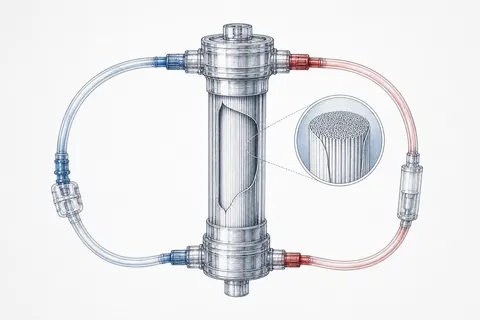
What Is EBO2 (EBOO)? The Procedure, the Evidence, and What Regulators Say
What EBO2 (EBOO) is, step by step from the papers that introduced it, how the US clinic version differs, what regulators say, and what is still unknown.