EBO2 (EBOO) Therapy Cost in 2026: What US Clinics Publish and What a Quote Leaves Out
What US clinics publish for EBO2 (EBOO): single-session and package prices from our dataset, fees a quote can leave out, and how to check package math.
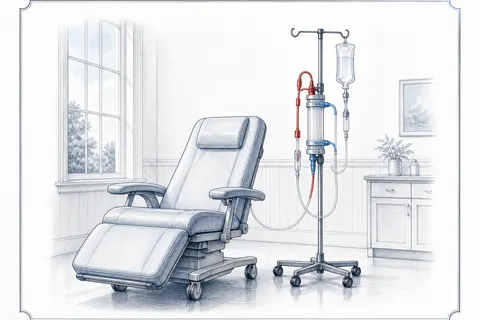
EBO2, also called EBOO, is a form of ozone therapy offered by some US wellness clinics. During a session, blood flows from a line in the arm through a filter, where it meets oxygen and ozone, and back through a second line.
We gather the published studies, what regulators have said, and what clinics state on their own pages, with a link to every source, so you can read it all in one place.

We read the EBO2 pages of 174 of the 177 listed clinics, most recently on October 4, 2026, and counted what they state. Clinics whose pages we could not read are left out. These are counts of statements, not findings about any clinic.
Every study in our EBO2 (EBOO) library in one place: design, size, what was measured and found, its limits, and a check for any study a clinic cites.

A clinic places two IV lines. A machine moves blood through a filter, where it meets a mix of oxygen and ozone across a membrane, and returns it. Clinics most often say a session takes 60 to 90 minutes.
What to expect, step by step, and how many sessions clinics recommend.
177 clinics listed. Verified listings link to the page on the clinic's own website where we confirmed it offers EBO2.
Every guide cites its sources and names the limits of each study.
What US clinics publish for EBO2 (EBOO): single-session and package prices from our dataset, fees a quote can leave out, and how to check package math.
An EBO2 (EBOO) visit stage by stage, from what clinic pages and the published studies say: intake and labs, preparation, the hour on the circuit, aftercare.
What the EBOO studies record about side effects, the harms documented with other ozone procedures, the risks of the circuit, and what regulators have found.
How to vet an EBO2 (EBOO) clinic: what clinic pages disclose, from our dataset, license and device lookups to run, what to get in writing, and 12 questions.
Read our editorial policy and medical review process.