Extracorporeal blood oxygenation and ozonation (EBOO): a controlled trial in patients with peripheral artery disease
Di Paolo N, Bocci V, Salvo DP, et al. International Journal of Artificial Organs, 2005.
- Study type
- Randomized controlled trial
- People studied
- 28 people
- Population
- Patients with peripheral artery disease
- Published
- 2005, International Journal of Artificial Organs
- Identifiers
- PMID 16288443, DOI 10.1177/039139880502801012
What the authors reported
In 28 patients with peripheral artery disease randomized to EBOO or intravenous prostacyclin, the abstract reports highly significant regression of skin lesions with EBOO, and says pain, pruritus, heavy legs and well-being differed significantly between the two groups; it found no significant change in vascularisation of the lower limbs before and after treatment in either group.
What limits this result
Small sample of 28 patients from a single Italian center; the available abstract does not describe blinding of outcome assessment or the randomization method.
Reports of the procedure as given to patients, and a review of them by its developers. Laboratory and device-development work on the circuit is under background science. One study rarely settles a medical question; our guides weigh each paper against the rest of the evidence.
How the study was done
- Design
- Randomized controlled clinical trial: 28 patients with PAD randomized to EBOO or intravenous prostacyclin
- Setting
- Nephrology and Dialysis Department, University Hospital of Siena, Siena, Italy
- Read from
- Read from the abstract only; where this page says nothing about an item, the abstract does not report it. Read on September 28, 2026.
Source: Abstract on PubMed
Study arms
| Group | Participants | What they received |
|---|---|---|
| EBOO | Not reported | Extracorporeal blood oxygenation and ozonation (EBOO) |
| Intravenous prostacyclin | Not reported | Intravenous prostacyclin (comparison treatment) |
Source: Abstract on PubMed
Procedure as reported
- Sessions
- 210 EBOO treatments (per-patient schedule not stated in the abstract)
In the paper's own units, not converted.
Source: Abstract on PubMed
What it measured
- Regression of skin lesions
- Highly significant regression with EBOO compared with prostacyclin
- Pain, pruritus, heavy legs and well-being
- Significantly different between the two groups
- Vascularisation of the lower limbs, before and after treatment
- No significant differences in either group
Source: Abstract on PubMed
Safety as reported
No side effects or complications were recorded during the 210 EBOO treatments
Source: Abstract on PubMed
Where we cite this study

Does EBO2 (EBOO) Work? The Evidence, Study by Study
Every study in our EBO2 (EBOO) library in one place: design, size, what was measured and found, its limits, and a check for any study a clinic cites.
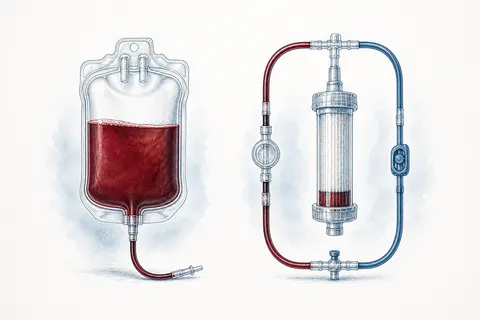
EBO2 (EBOO) vs 10-Pass Ozone: A Side-by-Side From the Primary Sources
EBO2 (EBOO) and 10-pass ozone compared from the papers that describe them, with the ozone-dose claim split into what was measured and what was assumed.
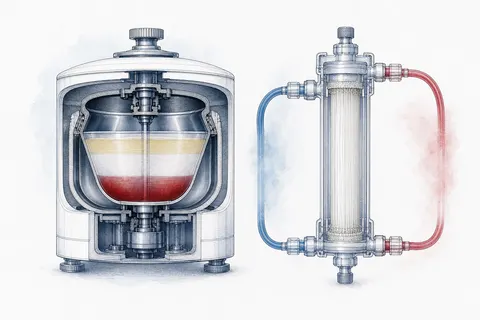
EBO2 (EBOO) vs Plasmapheresis: What Each Procedure Does to Blood
EBO2 (EBOO) and plasmapheresis side by side from FDA records and apheresis guidelines: what each takes out or adds, how it runs, how it is regulated.

EBO2 (EBOO), Blood Thinners, and Other Medicines: What the Sources Say and What to Ask
How EBOO circuits are kept from clotting, what heparin's FDA label warns, what clinics say about blood thinners, and what no source has studied.

EBO2 (EBOO) and Cancer Claims: What Regulators and Cancer Bodies Say
Cancer claims for EBO2 (EBOO), checked: what the research library holds, what regulators and cancer organizations have said, and what to ask an oncologist.
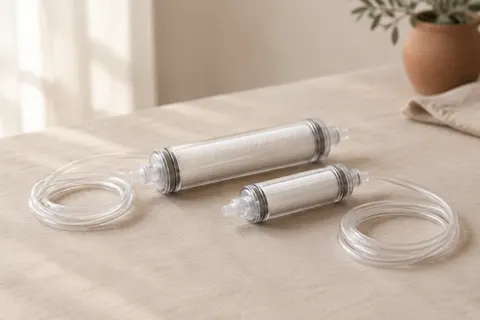
EBO2 (EBOO) vs Dialysis: How Ozone Dialysis Compares With Hemodialysis
EBO2 (EBOO), sold as ozone dialysis, set beside hemodialysis from primary sources: the filter, what flows past it, flow rates, FDA status, and the evidence.
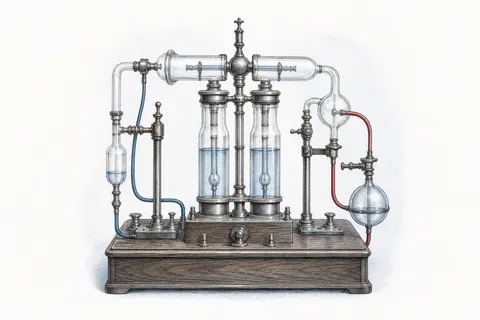
The History of EBO2 (EBOO): A Dated Timeline From Siena to US Clinics
When and where EBO2 (EBOO) began, how it reached US clinics, and how regulators responded, as a dated timeline in which every entry cites its source.
How Many EBO2 (EBOO) Sessions Do You Need? What Clinics Recommend and What Studies Used
How many EBO2 (EBOO) sessions US clinics recommend, from our dataset of clinic pages, set against the course lengths published studies actually used.

How to Choose an EBO2 (EBOO) Clinic: Checks You Can Run Before You Book
How to vet an EBO2 (EBOO) clinic: what clinic pages disclose, from our dataset, license and device lookups to run, what to get in writing, and 12 questions.

Ozone Therapy Adverse Events by Route: What Case Reports Show, and Where EBO2 (EBOO) Fits
Every ozone therapy adverse event we could read in case reports and series, grouped by route, plus how to search FDA's MAUDE data and report to MedWatch.
EBO2 (EBOO) Side Effects and Safety: What Studies, Case Reports, and Regulators Record
What the EBOO studies record about side effects, the harms documented with other ozone procedures, the risks of the circuit, and what regulators have found.
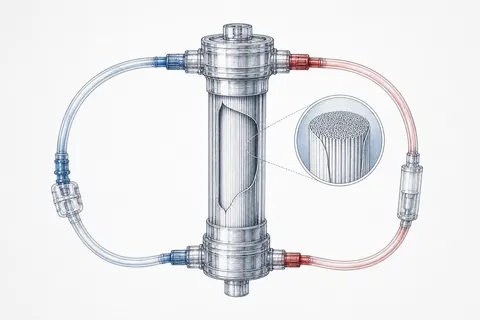
What Is EBO2 (EBOO)? The Procedure, the Evidence, and What Regulators Say
What EBO2 (EBOO) is, step by step from the papers that introduced it, how the US clinic version differs, what regulators say, and what is still unknown.
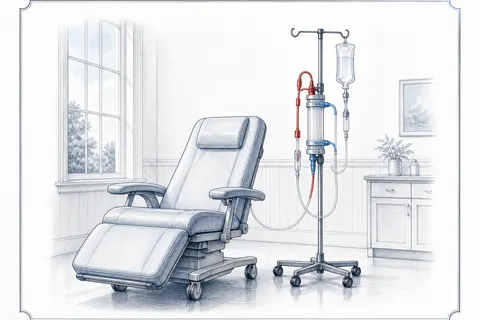
What to Expect at an EBO2 (EBOO) Session: A Timeline From Clinic Pages and the Studies
An EBO2 (EBOO) visit stage by stage, from what clinic pages and the published studies say: intake and labs, preparation, the hour on the circuit, aftercare.