Dialysis membranes and hemodialyzers
Clark WR, Lorenzin A, Ronco C. Contributions to Nephrology, 2026.
- Study type
- Review
- People studied
- No participants of its own (review)
- Published
- 2026, Contributions to Nephrology
- Identifiers
- PMID 42721103, DOI 10.1159/000552907
What the authors reported
A nephrology review of how hollow-fiber hemodialysis membranes are classified by pore size and permeability, and how pore size determines which molecules a filter can remove by convection.
What limits this result
Describes dialysis and hemodiafiltration membranes generally, not any EBO2 device specifically, and includes no ozone-related content.
How ozone acts on blood and cells, how blood filters work, the laboratory and device-development studies behind the EBOO circuit, and studies that measure markers in the blood rather than how patients fare. None of these shows whether EBO2 helps patients. One study rarely settles a medical question; our guides weigh each paper against the rest of the evidence.
How the study was done
- Design
- Review (the Europe PMC record is labelled Review)
- Setting
- Davidson School of Chemical Engineering, Purdue University, West Lafayette, Indiana, USA
- Read from
- Read from the abstract only; where this page says nothing about an item, the abstract does not report it. Read on September 28, 2026.
Source: Abstract on PubMed
Where we cite this study

Does EBO2 (EBOO) Work? The Evidence, Study by Study
Every study in our EBO2 (EBOO) library in one place: design, size, what was measured and found, its limits, and a check for any study a clinic cites.
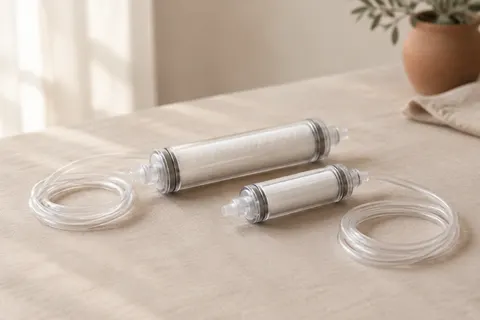
EBO2 (EBOO) vs Dialysis: How Ozone Dialysis Compares With Hemodialysis
EBO2 (EBOO), sold as ozone dialysis, set beside hemodialysis from primary sources: the filter, what flows past it, flow rates, FDA status, and the evidence.
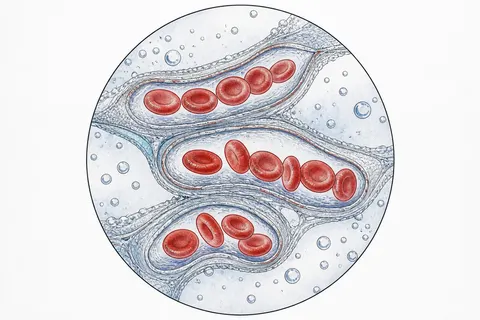
What Does the EBO2 (EBOO) Filter Actually Remove?
What the EBO2 (EBOO) filter removes: what papers measured, what is theory borrowed from dialysis, what clinics claim, and what a filtrate lab report must show.