Ozonation of blood during extracorporeal circulation. I. Rationale, methodology and preliminary studies
Bocci V, Di Paolo N, Garosi G, et al. International Journal of Artificial Organs, 1999.
- Study type
- Animal study
- Animals studied
- None (animal study)
- Population
- Saline and swine blood circulated through an oxygen-ozone gas exchanger in vitro, then sheep given extracorporeal circulation
- Published
- 1999, International Journal of Artificial Organs
- Identifiers
- PMID 10532435
What the authors reported
Dialysis-type membranes proved unsuitable for exposing blood to oxygen-ozone, so the authors used hydrophobic ozone-resistant hollow fibers. In saline, swine-blood and sheep tests they report that 10 µg/mL ozone produced biochemical effects, heparin was not an ideal anticoagulant, and sheep had no adverse effects after 50 min at 20 to 40 µg/mL, though the exchanger clogged with cells.
What limits this result
Bench and sheep development work on an extracorporeal gas-exchanger circuit, not the EBOO procedure as given to patients, and no clinical outcomes. The abstract does not say how many sheep were studied, describes no control group, and gives no numeric biochemical results. Abstract only.
How ozone acts on blood and cells, how blood filters work, the laboratory and device-development studies behind the EBOO circuit, and studies that measure markers in the blood rather than how patients fare. None of these shows whether EBO2 helps patients. One study rarely settles a medical question; our guides weigh each paper against the rest of the evidence.
How the study was done
- Design
- Feasibility study of exposing blood ex vivo to oxygen-ozone through a gas exchanger: saline tests, swine blood in vitro, then experiments in sheep
We investigated whether exposure of blood ex-vivo to oxygen-ozone (O2-O3) through a gas exchanger is feasible and practical.
- Setting
- Institute of General Physiology, University of Siena, Italy (author affiliation)
- Read from
- Read from the abstract only; where this page says nothing about an item, the abstract does not report it. Read on October 2, 2026.
Source: Abstract on PubMed
Study arms
| Group | Participants | What they received |
|---|---|---|
| Normal saline (bench test) | Not reported | Run through the system to measure hydrogen peroxide production at ozone concentrations from 5 to 40 microg/ml |
| Swine blood circulated in vitro | Not reported | Used to evaluate critical parameters of the system, including the anticoagulant |
| Sheep given extracorporeal circulation (number not stated) | Not reported | Several experiments to define anticoagulant dose (sodium citrate, ACD), priming solution, blood flow per minute, and the volume and concentration of the oxygen-ozone mixture |
Source: Abstract on PubMed
Procedure as reported
- Ozone concentration
- 20 to 40 microg/ml in the sheep (the higher concentrations tested)
The sheep showed no adverse effects even after 50 min of extracorporeal circulation at higher O3 concentrations (20 to 40 microg/ml)
- Session length
- Up to 50 min of extracorporeal circulation in sheep
The sheep showed no adverse effects even after 50 min of extracorporeal circulation
- Anticoagulant
- Sodium citrate (ACD); heparin found not ideal for this system
defined optimal anticoagulant dose (sodium citrate, ACD)
- Filter
- Hydrophobic O3-resistant hollow fibers in a polycarbonate housing, membrane area about 0.5 m2
In the paper's own units, not converted.
Source: Abstract on PubMed
What it measured
- Dialysis-type semipermeable membranes as the gas exchanger
- Found unsuitable because they are hydrophilic and vulnerable to ozone
- Heparin as the anticoagulant (swine blood in vitro)
- Not an ideal anticoagulant for this system
- Lowest ozone concentration with biochemical effects
- As low as 10 microg/ml was effective by the biochemical parameters (no figures in the abstract)
- Gas exchanger performance during perfusion in sheep
- Became less effective (low pO2 values) because of progressive clogging with cells
Source: Abstract on PubMed
Safety as reported
The sheep showed no adverse effects, even after 50 min of extracorporeal circulation at 20 to 40 microg/ml
Source: Abstract on PubMed
Where we cite this study
Does EBO2 (EBOO) Work? The Evidence, Study by Study
Every study in our EBO2 (EBOO) library in one place: design, size, what was measured and found, its limits, and a check for any study a clinic cites.
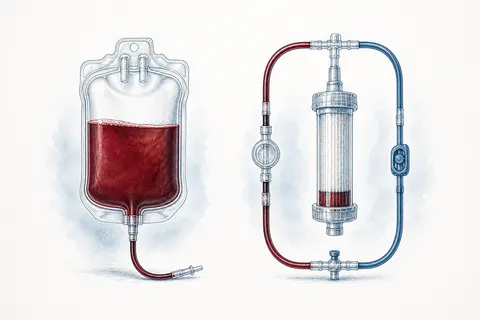
EBO2 (EBOO) vs 10-Pass Ozone: A Side-by-Side From the Primary Sources
EBO2 (EBOO) and 10-pass ozone compared from the papers that describe them, with the ozone-dose claim split into what was measured and what was assumed.

EBO2 (EBOO) Around the World: What Regulators Outside the US Have Said
Is EBO2 (EBOO) approved in Europe or elsewhere? What regulators in Italy, Germany, Brazil, the UK, Canada, and Australia have said, in their own words.
EBO2 (EBOO), Blood Thinners, and Other Medicines: What the Sources Say and What to Ask
How EBOO circuits are kept from clotting, what heparin's FDA label warns, what clinics say about blood thinners, and what no source has studied.

EBO2 (EBOO) Devices and FDA Status: The Filter, the Ozone Generator, and the Circuit
What the FDA has said about each device in an EBO2 (EBOO) circuit, what an FDA-cleared filter covers, and what FDA records show for the names clinics use.
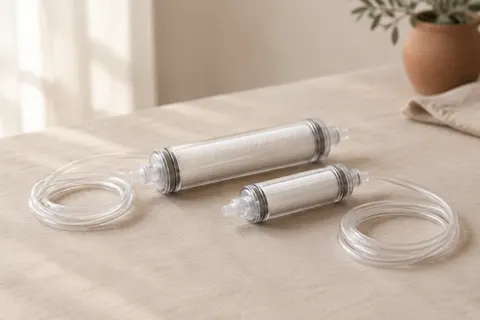
EBO2 (EBOO) vs Dialysis: How Ozone Dialysis Compares With Hemodialysis
EBO2 (EBOO), sold as ozone dialysis, set beside hemodialysis from primary sources: the filter, what flows past it, flow rates, FDA status, and the evidence.
The History of EBO2 (EBOO): A Dated Timeline From Siena to US Clinics
When and where EBO2 (EBOO) began, how it reached US clinics, and how regulators responded, as a dated timeline in which every entry cites its source.
EBO2 (EBOO) Side Effects and Safety: What Studies, Case Reports, and Regulators Record
What the EBOO studies record about side effects, the harms documented with other ozone procedures, the risks of the circuit, and what regulators have found.
What Is EBO2 (EBOO)? The Procedure, the Evidence, and What Regulators Say
What EBO2 (EBOO) is, step by step from the papers that introduced it, how the US clinic version differs, what regulators say, and what is still unknown.
What Does the EBO2 (EBOO) Filter Actually Remove?
What the EBO2 (EBOO) filter removes: what papers measured, what is theory borrowed from dialysis, what clinics claim, and what a filtrate lab report must show.
What to Expect at an EBO2 (EBOO) Session: A Timeline From Clinic Pages and the Studies
An EBO2 (EBOO) visit stage by stage, from what clinic pages and the published studies say: intake and labs, preparation, the hour on the circuit, aftercare.