Ozone dialysis delivers three or more times the ozone than other forms of ozone blood treatment
Rowen RJ, Grabovac S, Su TB. Medical Gas Research, 2023.
- Study type
- Case series
- People studied
- 12 people
- Published
- 2023, Medical Gas Research
- Identifiers
- PMID 36204785, DOI 10.4103/2045-9912.356474
What the authors reported
In 85 measurements on 12 patients receiving ozone dialysis, the authors report an average uptake of 37% of the generator output (range 25-50%) and conclude uptake is at least 3 times higher than other blood-ozone methods, using theoretical delivery figures for those methods.
What limits this result
Measurements from one clinic, reported by the technique's own practitioners, with no comparison group and no clinical outcomes; the figures for other methods are theoretical maximums, not measurements. PubMed lists no design type; we call it a case series.
Reports of the procedure as given to patients, and a review of them by its developers. Laboratory and device-development work on the circuit is under background science. One study rarely settles a medical question; our guides weigh each paper against the rest of the evidence.
How the study was done
- Design
- Measurement of ozone uptake in patients receiving ozone dialysis during their routine treatment
- Setting
- Rowen-Su Medical Clinic, Santa Rosa, CA, USA
- Read from
- Read from the full text of the paper. Read on September 28, 2026.
Source: Full text on PubMed Central
Study arms
| Group | Participants | What they received |
|---|---|---|
| Patients receiving ozone dialysis as routine therapy | 12 | Ozone dialysis during routine treatment; 85 measurements made in total |
Source: Full text on PubMed Central
Procedure as reported
- Ozone concentration
- 10–60 μg/mL (most measurements at 30–40 μg/mL); gas flow rate 0.9 L/min
Ozone gas was delivered at 10–60 μg/mL, with most measurements conducted when delivered ozone gas concentration was 30–40 μg/mL and at a gas flow rate of 0.9 L/min.
- Session length
- exactly 1 hour
- Blood flow
- pump speeds of 30, 35, and 40 mL/min
We then sought to determine the effect of pump speed on ozone absorption using data we collected at pump speeds of 30, 35, and 40 mL/min.
- Anticoagulant
- Heparin: 15,000 units in 1 L of normal saline, as a slow intravenous drip
- Filter
- Renak CTA (cellulose triacetate) 1500 dialysis chamber (SB-KAWASUMI, Sapporo, Japan)
In the paper's own units, not converted.
Source: Full text on PubMed Central
What it measured
- Authors' headline finding on ozone uptake by continuous countercurrent blood flow
- At least 3 times higher than any comparable form of blood ozone administration currently available
- Fractional ozone uptake, as a share of the generator's output
- Average uptake 37%, with a range of 25–50% for individual treatments
- Calculated blood uptake at 30 μg/mL for a 1-hour treatment
- ~460,000 μg blood uptake (30 μg/mL minus 7 μg/mL loss, x 0.9 L/min x 60 minutes x 37%)
- Ozone delivered at 30 μg/mL compared with ozone high-dose therapy (OHT, 10 passes)
- Average of 3.28 times the amount of ozone; OHT (10 passes) given as delivering 140,000 μg
Ozone dialysis when delivered at 30 μg/mL appears to deliver an average of 3.28 times the amount of ozone compared to next highest method of delivery – OHT (10 passes) – which delivers 140,000 μg.
- Basis of the 140,000 μg figure for OHT (10 passes)
- 140,000 μg of ozone "would be delivered" if the single-pass treatment is done a total of 10 times in one sitting
- Delivery compared with gravity major autohemotherapy (MAH)
- Dialysis treatment described is delivering some 32–46-fold more than gravity MAH
- Ozone lost across a dry dialyzer and tubing, without blood
- Average loss of 23% measured after 15 minutes at each concentration
We found an average loss of 23% measured after 15 minutes at each concentration, and the loss was consistent with multiple measurements.
- Effect of blood pump speed (30, 35, 40 mL/min) on ozone absorption
- Absorption appears to increase by up to 30% at 40 mL/min compared with 30 mL/min
Source: Full text on PubMed Central
Safety as reported
Authors state that at least 400 sessions of ozone dialysis were performed with no untoward effects observed
Source: Full text on PubMed Central
Funding and conflicts
Conflicts of interest: none declared
Source: Full text on PubMed Central
Where we cite this study

Who Should Not Get EBO2 (EBOO)? Contraindications Compared Across Sources
What an ozone physiologist, an Italian consensus, a trial's exclusions, and eleven EBO2 clinics list as reasons not to treat, compared condition by condition.
Does EBO2 (EBOO) Work? The Evidence, Study by Study
Every study in our EBO2 (EBOO) library in one place: design, size, what was measured and found, its limits, and a check for any study a clinic cites.
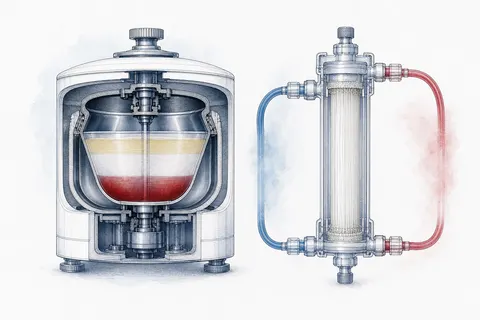
EBO2 (EBOO) vs Plasmapheresis: What Each Procedure Does to Blood
EBO2 (EBOO) and plasmapheresis side by side from FDA records and apheresis guidelines: what each takes out or adds, how it runs, how it is regulated.

EBO2 (EBOO), Blood Thinners, and Other Medicines: What the Sources Say and What to Ask
How EBOO circuits are kept from clotting, what heparin's FDA label warns, what clinics say about blood thinners, and what no source has studied.
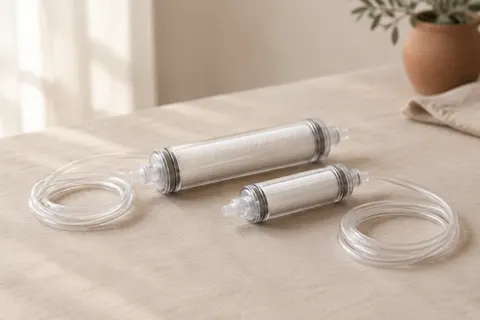
EBO2 (EBOO) vs Dialysis: How Ozone Dialysis Compares With Hemodialysis
EBO2 (EBOO), sold as ozone dialysis, set beside hemodialysis from primary sources: the filter, what flows past it, flow rates, FDA status, and the evidence.
How Many EBO2 (EBOO) Sessions Do You Need? What Clinics Recommend and What Studies Used
How many EBO2 (EBOO) sessions US clinics recommend, from our dataset of clinic pages, set against the course lengths published studies actually used.

Ozone Therapy Adverse Events by Route: What Case Reports Show, and Where EBO2 (EBOO) Fits
Every ozone therapy adverse event we could read in case reports and series, grouped by route, plus how to search FDA's MAUDE data and report to MedWatch.
EBO2 (EBOO) Side Effects and Safety: What Studies, Case Reports, and Regulators Record
What the EBOO studies record about side effects, the harms documented with other ozone procedures, the risks of the circuit, and what regulators have found.
What Does the EBO2 (EBOO) Filter Actually Remove?
What the EBO2 (EBOO) filter removes: what papers measured, what is theory borrowed from dialysis, what clinics claim, and what a filtrate lab report must show.