Benefits ·
How Low-Dose Ozone Works in the Body: What a New Review of the Lab Evidence Says
Italian researchers gathered three decades of lab studies on low-dose ozone. The pattern: a mild stress that switches on the body's own defenses.
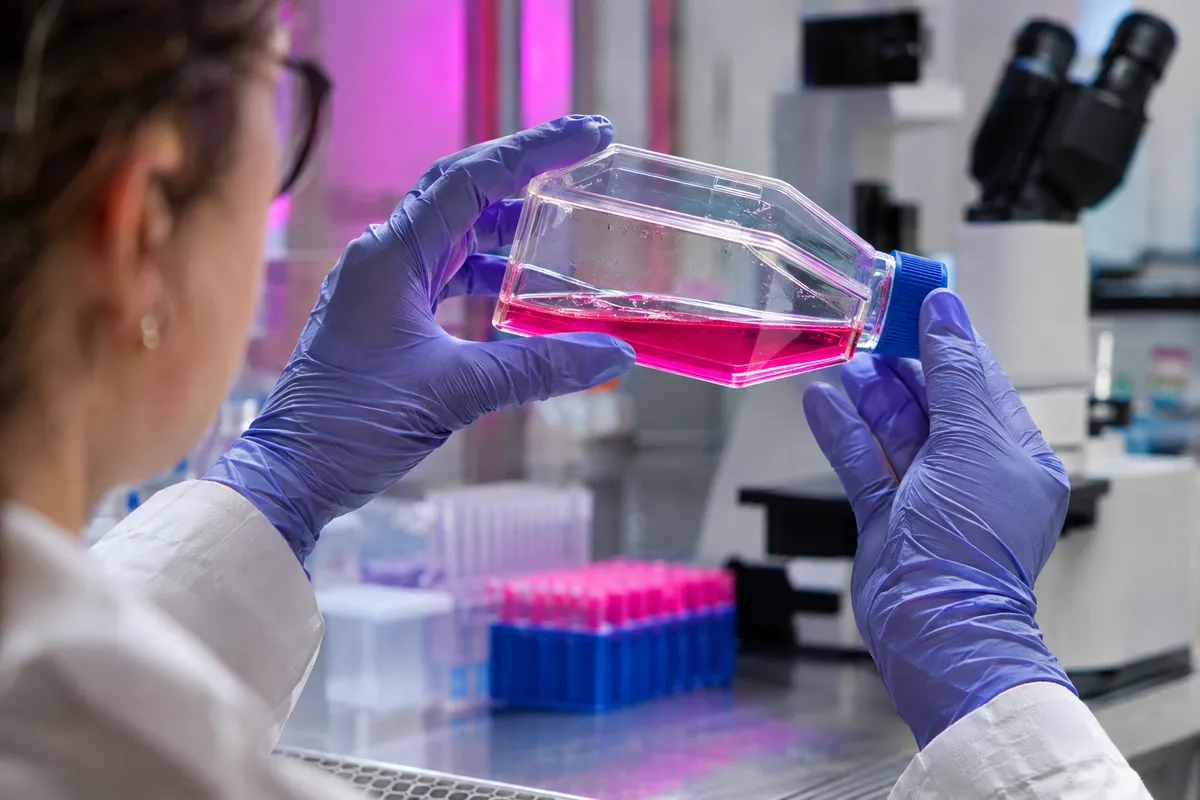
What is ozone actually doing in the body? It is a fair question for anyone looking at EBO2 (also called EBOO), and a new review in the journal Medical Gas Research gives a detailed answer from the laboratory side. Researchers from the universities of Verona, Trento and Pavia in Italy went through the experimental studies on low-dose ozone published since the 1990s and laid out what they show, step by step.
The paper went online on September 12, 2026. It covers experiments on cells, on blood and tissue treated outside the body, and on animals. It deliberately leaves out clinical studies in patients, so it explains how ozone may work. It does not measure how well any treatment works in people.
A small stress that wakes up the body’s defenses
The central idea is what researchers call the low-dose concept. Ozone is a strong oxidant, and at high concentrations it damages cells. At low concentrations, the review says, it does something different: it causes a brief, mild oxidative stress that cells answer by turning on their own protective systems. The authors describe the working range as roughly 10 to 50 micrograms of ozone per milliliter of oxygen, a relatively narrow window in which the stress stays moderate.
The switch at the center of this response is a protein called Nrf2. In cell experiments, low-dose ozone sent Nrf2 into the nucleus, where it turned on a set of genes that make antioxidant and protective molecules. The review calls this pathway clearly established and lists experiments in which it protected heart, brain, pancreas and muscle tissue in animals after an injury.
What happens in blood
For anyone considering an ozone blood therapy, the section on blood is the most relevant. When human blood is treated with low concentrations of ozone outside the body, the studies in the review found a short rise in reactive oxygen molecules followed by an antioxidant response. More detailed chemical profiling of ozonated blood found changes tied to antioxidant activity, to calmer inflammation and to energy production.
Experiments with human platelets and platelet-rich plasma found that ozone prompted the release of growth factors involved in tissue repair and in the growth of new blood vessels.
Calming inflammation and supporting repair
The second large body of evidence concerns inflammation. Across many animal and cell experiments, low-dose ozone turned down a master switch for inflammation known as NF-kB, and levels of inflammatory signals such as IL-6, IL-1 beta and TNF-alpha fell. The review reports this pattern in animal models of kidney disease, stroke and other conditions.
The authors also describe a regenerative side. Low-dose ozone stimulated fibroblasts, cartilage cells and bone-forming cells, the cells that rebuild connective tissue, cartilage and bone. In aged rats, ozone lowered markers of oxidative stress in several organs and improved measures of energy production in the heart and in a memory region of the brain.
What the review does not settle
Every finding above comes from cells, tissue samples or animals. The authors say so plainly and end with a call for more research to work out the best treatment methods, how long effects last and standard clinical procedures for specific conditions. They note that low-dose ozone is already used alongside other treatments in fields such as dentistry, dermatology, orthopedics and rheumatology, and that clinical observation has run ahead of the understanding of how it works. This review is an attempt to close that gap.
What it means if you are looking at EBO2
The review covers ozone given in several ways and does not study EBO2 by name. EBO2 is one of the ways of giving an oxygen and ozone mix through the bloodstream: blood flows from one arm through a filter, where it meets the gas, and returns through the other arm.
What the review offers is a clear picture of the biology behind the antioxidant and anti-inflammatory effects reported for low-dose ozone, and an honest line between what has been shown in the laboratory and what still needs testing in people. To see how a session works, start with what is EBO2. For the studies done in people so far, read does EBO2 work?, and to compare clinics near you, use the clinic directory.