Plasmapheresis combined with cell mass ozonation in endogenous uveitis treatment
Onishchenko AL, Kolbasko AV, Chernysheva AD, et al. Vestnik Oftalmologii, 2011.
- Study type
- Other
- Population
- 179 patients (209 eyes) with endogenous uveitis, analyzed in 3 patient groups
- Published
- 2011, Vestnik Oftalmologii
- Identifiers
- PMID 22442992
What the authors reported
Analyzing treatment results in 3 patient groups (179 patients, 209 eyes) with endogenous uveitis, the authors report an advantage for their modification of plasmapheresis combined with ozonation of the cell mass, and describe effects such as correction of T-cell immunodeficiency and a decrease of circulating immune complexes. The abstract gives no figures.
What limits this result
Abstract only (PubMed lists an English abstract for a non-English article). The abstract does not say how patients were assigned to the 3 groups, what the comparison groups received, the ozone dose, the follow-up, or any numeric result. Not the EBOO procedure: ozone is applied to the cell mass during plasmapheresis.
Other ozone methods, such as major autohemotherapy, that clinics cite in support of EBO2. A result for one method does not transfer automatically to another. One study rarely settles a medical question; our guides weigh each paper against the rest of the evidence.
How the study was done
- Design
- Analysis of treatment results in 3 patient groups (179 patients, 209 eyes)
- Read from
- Read from the abstract only; where this page says nothing about an item, the abstract does not report it. Read on October 2, 2026.
Source: Abstract on PubMed
Study arms
| Group | Participants | What they received |
|---|---|---|
| Patients with endogenous uveitis, 3 groups combined | 179 | Treated in 3 groups, including the authors' modification of plasmapheresis; the abstract does not describe each group's treatment |
Source: Abstract on PubMed
What it measured
- Treatment results across the 3 patient groups
- The authors report an advantage of their modification of plasmapheresis (no figures in the abstract)
Analysis of treatment results of 3 patient groups (179 patients, 209 eyes) showed advantage of this original modification of plasmapheresis.
- Mechanisms the authors describe
- Correction of T-cell immunodeficiency and a decrease of circulating immune complexes, among others
Some sanogenetic mechanisms of the new treatment are disclosed in the study such as correction of T-cell immunodeficiency, decrease of circulating immune complexes and others.
Source: Abstract on PubMed
Where we cite this study

Does EBO2 (EBOO) Work? The Evidence, Study by Study
Every study in our EBO2 (EBOO) library in one place: design, size, what was measured and found, its limits, and a check for any study a clinic cites.
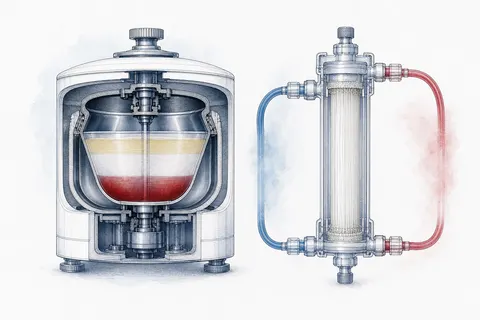
EBO2 (EBOO) vs Plasmapheresis: What Each Procedure Does to Blood
EBO2 (EBOO) and plasmapheresis side by side from FDA records and apheresis guidelines: what each takes out or adds, how it runs, how it is regulated.