Advances in ozone technology for preservation of grains and end products: application techniques, control of microbial contaminants, mitigation of mycotoxins, impact on quality, and regulatory approvals
Sitoe EDPE, Pacheco FC, Chilala FD. Comprehensive Reviews in Food Science and Food Safety, 2025.
- Study type
- Review
- People studied
- No participants of its own (review)
- Published
- 2025, Comprehensive Reviews in Food Science and Food Safety
- Identifiers
- PMID 40260769, DOI 10.1111/1541-4337.70173
What the authors reported
A food-science review of how gaseous ozone controls microbes and mycotoxins in stored grain, describing ozone's biocidal mechanism and regulatory approvals for food preservation.
What limits this result
Entirely about industrial food and grain preservation, not human medicine or blood therapy; provides no evidence about mycotoxin removal from blood by EBO2 or any ozone therapy.
How ozone acts on blood and cells, how blood filters work, the laboratory and device-development studies behind the EBOO circuit, and studies that measure markers in the blood rather than how patients fare. None of these shows whether EBO2 helps patients. One study rarely settles a medical question; our guides weigh each paper against the rest of the evidence.
How the study was done
- Design
- Review of strategies for applying ozone (O3) to grains and end products, focusing on pest control, fungal inactivation, mycotoxin reduction, and overall food safety
- Setting
- Department of Agricultural Engineering, Campinas State University, Campinas, São Paulo, Brazil (first author's affiliation)
- Read from
- Read from the full text of the paper. Read on September 28, 2026.
Sources: Full text on Europe PMC, Abstract on PubMed
Safety as reported
From its operator-health section (industrial exposure, not a clinical study): the review says the human exposure limit is based on studies showing ozone's adverse health effects, including irritation and damage to the mucous membranes of the eyes and respiratory system
Source: Full text on Europe PMC
Funding and conflicts
Conflicts of interest: the authors declare none
Source: Full text on PubMed Central
Where we cite this study

Does EBO2 (EBOO) Work? The Evidence, Study by Study
Every study in our EBO2 (EBOO) library in one place: design, size, what was measured and found, its limits, and a check for any study a clinic cites.
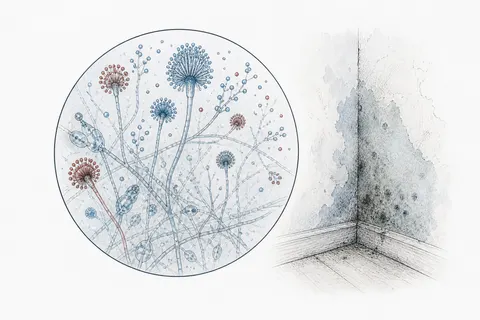
EBO2 (EBOO) for Mold Toxicity and CIRS: Clinic Claims, Mycotoxin Tests, and the Evidence
What clinics claim about EBO2 (EBOO) for mold illness, what CDC says about urine mycotoxin tests, and what the one EBOO case report really measured.